

33 tiny mystical research projects to re-enchant your life and invite numinous encounter into your world
creative research is fertile ground for the mystic

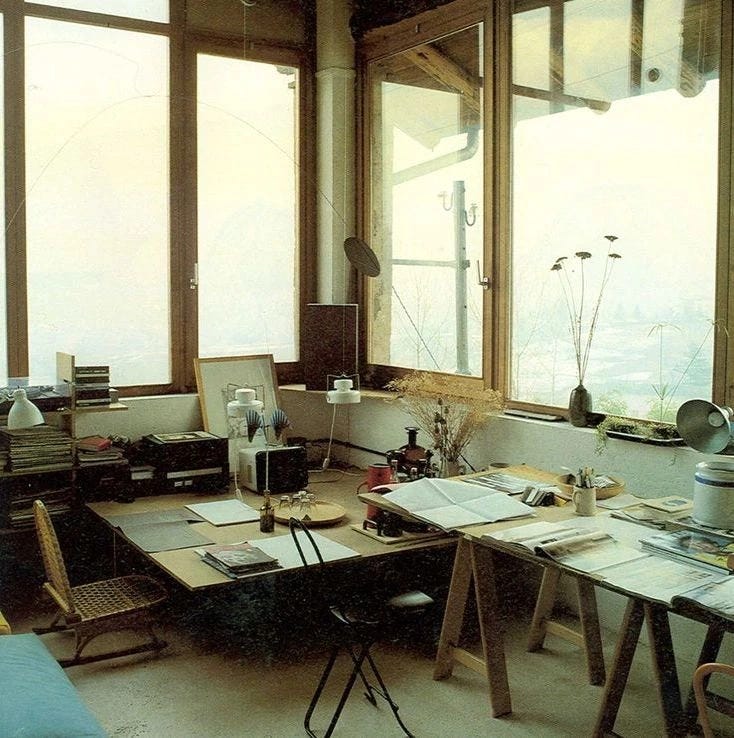
I research how we archive transcendent experiences and altered states of consciousness, and as a result, I read a lot about the science of mysticism. (Seriously, I spend half my reading days just kicking my feet under the desk in glee — I love my work!)
Psychologist and philosopher William James1 theorized that mystical states of consciousness share four key characteristics:
Ineffability — you can’t describe the experience in words, no matter how hard you try
Noetic quality — you feel like you’ve expanded your state of knowledge or knowing as an experiencer
Transiency — the experience is fleeting, but identified (often when it’s happening)
Passivity — feeling as if you’ve been grasped or held by a power greater than yourself, like something has happen to you or been thrust upon you without any special work or effort from your end
You’re probably going through your own Meaningful Experience mental rolodex, squaring up which of your memories might be categorized as “mystical” according to James.
When I stack up my encounters with the numinous as decoded by James, a few patterns emerge. Nature is one of my biggest mystical teachers, bestowing numinous experiences on me usually when I’m alone or still, sometimes sitting on a big rock. Meaningful places, like museums or historical spaces, are another place where I’ve felt that epiphanic pulse. Sometimes from a really great dance class, or meditation that just hits.
But more often than not, I’ve had numinous encounters when following my curiosity and embarking on what you might call leisurely or ambient “creative research” — when I’ve been generally thinking about some phenomenon or theme or concept, and then I accidentally stumble across a totally separate reference in a book or something or hear someone explain an idea on a podcast and then BOOM it’s like a bunch of tiny explosions in my brain and all of the sudden I see the light. Momentarily, everything makes sense. (This is when I frantically scrounge around for a pencil and notebook or my phone or a stone tablet to just get. the info. down!)
That’s why when I’m working with someone who self-proclaims to have “lost their magic,” my first thought is not “well, first you need to buy $387 worth of selenite crystal wands...” No! If you feel you’re living a disenchanted life, one way to re-enchant your world is to engage in the act of mystical creative research.
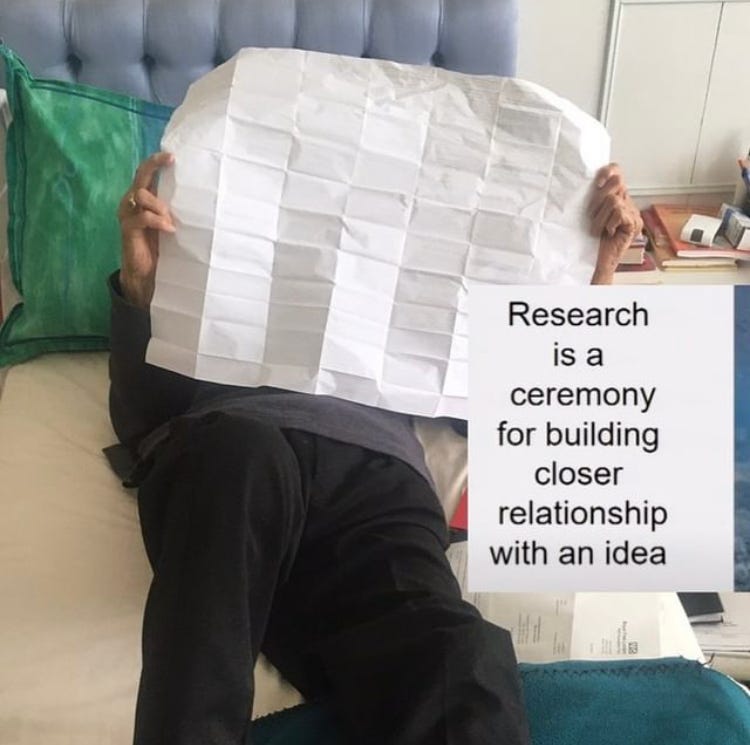
Because the key to magic is just paying close attention. And a creative research project is effectively paying very close attention to something, but with a paper trail. A question you care about, a way of looking, somewhere to put what you find.
If the Summer of Re-Enchantment has a thesis — and it does, I wrote it! — it’s that re-enchantment isn’t out there waiting to be discovered. It’s the moment you look at the thing you stopped seeing and think: oh, there you are. A tiny creative research project can be that moment. You pick one ordinary thing, you agree to look at it on purpose for a set amount of time, you keep a record, and you stay open to it changing you.
And if you’re reading this somewhat skeptically, I get it. But listen to this: There’s this great paper on spiritual experiences that happen in leisure settings.2 The authors, McDonald and Schreyer, argue that mystical and numinous encounters are some of the benefits of engaging in leisure activities (reading, writing, painting, walking, doing stuff for farts and toots instead of for productivity purposes). BUT WAIT. Scholé, the Greek word from which our modern school is derived, actually means “leisure” or “restful learning.”
Basically, bitches have been on this “leisurely research is an opportunity for mystical encounter” beat for a while. So… let’s embrace it, yes??
the anatomy of a tiny research project
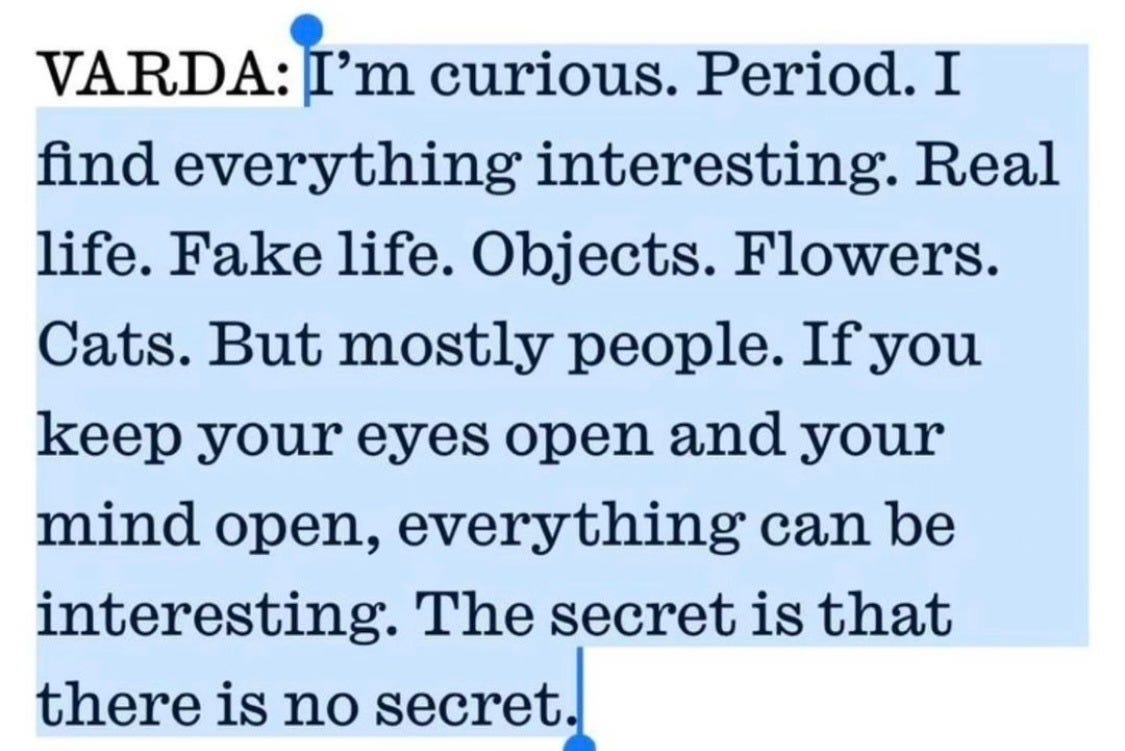
A question you care about. Most of my questions are embarrassingly simple, like, why do crayons look like that? This does not have to be a question that would impress someone. “What does my grandmother remember about her mother’s sewing” is a research question. So is “why do I keep buying celery I do not eat.”
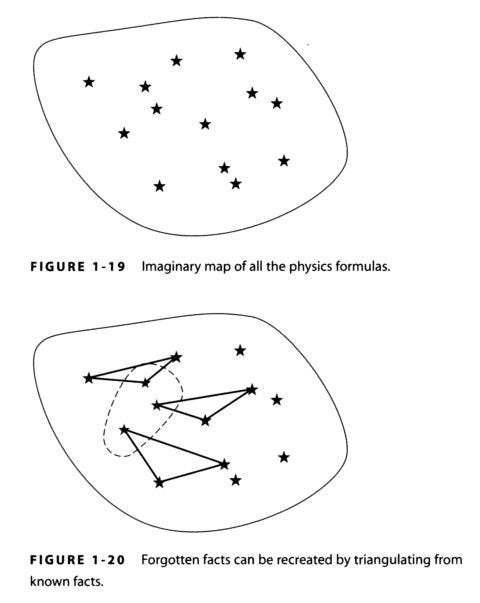
A way of noticing. Counting, logging, photographing, interviewing, copying by hand, walking the same route, sketching, tasting. Pick one. Beware — reading counts, but it doesn’t really count until you’ve written out or metabolized what you’ve read in some specific way that has traces of your own aura around it. It’s so easy to just consume consume consume information, but often the coalescing of existing ideas plus your weird freaky experiences is what yields that angels-singing-in-the-round mystical epiphany.
A record. This is the part most of us skip and it’s the part that matters most. A note in your phone, a page in a notebook, photos in your iPhone album with an actual name. The record is what turns noticing into research. It’s also, not coincidentally, what I said about spell work a few weeks ago: the magic is the attention. Your notebook is attention made traceable.
An end date. Mine run three-ish months because that’s the container I like. Yours can run a weekend. An end date keeps you honest and out of research purgatorio.
A few caveats before the list of ideas, because I know us:
Keep it small.
It’s allowed to be useless. Actually it’s better if it’s useless. The point is not optimization — we are not gathering data on ourselves so we can become more efficient little productivity raisins. The point is contact with your own life.
You don’t need all 33. You need one. This list is a buffet, not a curriculum 🙃
fieldwork (your neighborhood is a research site)
Walk the same block at the same time every day for two weeks. Log one thing that changed since yesterday. By day five this gets hard. By day ten it gets practically psychedelic.
Learn the names of five plants you pass every day. Naming a thing is the fastest known method for making it visible. [FYI this is also how shadow work and crushes work.]
Visit your garden every morning at the same time. Take a picture or draw a sketch of the same plant. Whisper a prayer or spell as it arrives on you. Notice what happens.
Map the desire paths in your neighborhood: the places where the dirt track says the official sidewalk is w-r-o-n-g. Photograph them. Consider what they’re trying to tell you about the alternative topography of your neighb.
Find the oldest visible date in your neighborhood — a cornerstone, a sidewalk stamp, a plaque. Then find the second oldest. Congratulations, you’re a public historian now.
Sit in one public spot for twenty minutes a week with no phone and write down the first ten thoughts that arrive. Repeat all summer. At the end, read them in order. This is longitudinal boredom research.
archival work (you are already a collection; act like it)

Read your Notes app top to bottom like a found manuscript. Who wrote this???? What were they afraid of forgetting? Write a one-paragraph abstract of the author’s preoccupations.
Perform an excavation of your camera roll’s screenshots. Screenshots are like a folk archive of what past versions of us found valuable. Sort a month’s worth into piles and name the piles. Spot the trends, write them down. [If you’re anything like me, this is a great project to do to set yourself up with like, 27 more mini research projects. I’m constantly taking screengrabs of things I find interesting and want to explore more deeply in the elusive future when I have “more time.”)
Catalog one shelf. Every object: where it came from, who gave it to you, what significance it holds to you or to the person who bestowed it to you, whether you’d grab it in a fire. Archivists call this a finding aid. You can call it whatever you want, it’s your shelf.
Reread a journal from exactly ten years ago and annotate it in the margins as your current self. Be kind. She was doing her best with the information available.
Keep every grocery receipt for a month, then read them as a portrait of a person. What does this person believe about her future? (She believes she WILL eat the celery, this time.)
Build a concordance of your own texts: search one word — “sorry,” “busy,” “soon” — in your messages and read every result in a row. I am not responsible for what you find with this one; if you find yourself in a situationship atm, maybe skip this prompt…
embodied studies (the body is the archive)
Lie on the floor for ten minutes a day for one week and note where your body actually touches the ground. Left heel? Right ribs? Draw it. Watch the map change over the week. [Feldenkrais people have been running this study for a hundred years; the results remain intriguing and numinous.]
Eat the same in-season fruit every day and rate it out of ten. You are conducting a peak-stonefruit study. Somebody has to.
Make a sound map of your house at 6am and again at 10pm. The refrigerator has been saying something this whole time.
Track your energy for one week: every hour, a number from 1 to 5 and one word. Then compare your actual golden hours to when you keep scheduling your hardest work. Sit with the discrepancy.
Take a dance class, a swim, a long walk — anything wordless — and immediately afterward write for five minutes without stopping. You’re studying what the body knew that the brain hadn’t been told yet.
Log every urge to check your phone for one day. Not the checking — the urge. Timestamp and what was happening. The urge is data, and data is morally neutral, so don’t feel bad about timestamping every two minutes. (Unless you really want to)
oral history (everyone you know is a primary source)
Interview an elder relative about a skill in your family lineage — the sauce, the hem stitch, the way of loading a dishwasher that is apparently verbotten. Record it. Practicing an ancestral craft is a form of veneration, and maybe asking about it is, too.
Cook a family recipe while the person who owns it narrates over the phone. Transcribe the parts that aren’t about food.
Ask five friends the same slightly weird question — “what did you collect as a kid?” “what’s a smell that wrecks you?” “what’s the first song on your sex playlist?” — and write down their answers verbatim. Study the pattern. There’s always a pattern… there’s always money in the banana stand.
Collect the origin story of every friend’s name. This is genealogy, etymology, and gossip in one method. Extremely efficient!
Ask your oldest friend what they thought of you when you first met. Field notes on a subject you cannot observe directly: yourself, from outside.
divinatory instruments (esoteric tools as data collection)
Pull one card every morning for a month, but here’s the twist: before you look anything up, write one sentence about your gut reaction. The research subject is actually your personal projections on the card, not the actual card. The deck is just very good bait.
If you pulled your Matrix of Destiny chart with us in June: for two weeks, log every time you actually use one of your Gifts and Talents — and every time you ignored the gift and chose Hard Mode instead. This is the most annoying study on this list. It’s also the one I’d assign first.
Keep a synchronicity log: timestamp, location, what you were thinking about when the weird thing happened. Six weeks minimum. You cannot see the pattern in real time; that’s what the log is for.
Write one spell — you know how now — and run it like a study: intention recorded at the start, a lab notebook in the middle, results reviewed at the end date. Rigor and ritual are not antagonists, at least not always.
Log your dreams for a month with tags, like a tiny librarian of the unconscious. At the end, count the tags. Whatever shows up nine times is your dissertation topic.
process studies (make the same thing until it tells you something)
Draw your coffee cup every morning for two weeks. Date each one. Allow the drawings to get worse before they get better, to get strange. The strange ones are where the interesting stuff lives.
Bake the same loaf of bread weekly and change exactly one variable at a time. Log it. This is real experimental design and also you get bread.
Rewear at least one article of clothing every day. So if on Monday you wore a skirt and a t-shirt, on Tuesday you wear the same skirt and a sweater and a bowtie. On Wednesday you wear the bowtie and jeans and a tank top. On Thursday you wear the jeans and a straples top and a flannel. You get where I’m going with this? Notice what happens to your outfit creativity when you practice a little constraint.
Copy one paragraph you love by hand every day. Annotate what your hand noticed that your eyes had been skating over. Copywork is reading at 1x speed in a world that skims.
Mend something visibly and document it: before, after, and a short interview with yourself about why you kept that holey t-shirt from college in the first place.
Read one poem every morning before you look at your phone, and log the single line that snagged. By September you’ll have an anthology of your own attention — a record of what kept catching on you all summer.
Design your own. One question, one way of looking, one record, one end date. You already know something you’ve been dying to pay attention to. That little pilot light of curiosity you felt just now, reading this? That’s the one. Go.
The world is not withholding enchantment from you. We’ve just been walking past it at speed, unrecorded. Pick a project. Keep the notebook. And when the ordinary thing turns its face toward you sometime in August — and it will — you know what to say:
oh. there you are.
James, W. (1910). A suggestion about mysticism. Journal of Philosophy, Psychology and Scientific Methods, 7(4), 85–92.
McDonald, B., & Schreyer, R. (1991). Spiritual benefits of leisure participation and leisure settings. In B. L. Driver, P. J. Brown, & G. L. Peterson (Eds.), Benefits of leisure (pp. 179–194). State College, PA: Venture.
Not only do I love all of these ideas but this article is just so well written, and funny, and interesting, and I just loved it.
Well this was the lovely reboot to my writing inspiration system that I needed! When I was a teenager I actually did randomly collect the origin stories of middle names - I went around for years just asking me people to tell me all about their middle names just because it fascinated me. Thank you for this, it somehow reminded me of the writer/researcher I used to be.